

My Friend Asked Me Two Very Fair Questions About Smart Locks


I was chatting with a friend recently, and somehow we started talking about smart locks.
She actually liked the idea straight away.
No more searching for keys at the bottom of a handbag.
No more wondering, “Did I lock the door?” after leaving the house.
No more hiding spare keys somewhere “just in case.”
No more giving physical keys to different people and hoping they don’t get lost.
She could see why smart locks are useful.
So I asked her, half jokingly:
“So… would you actually get one?”
She smiled and said:
“Maybe. I’d need to think about it.”
And that answer made me curious.
Because usually, when someone says they need to “think about it,” there is a reason behind it. So I asked her what she was unsure about.
That was when she told me her two biggest worries:
“What if it stops working?”
And then:
“What if the battery dies?”
And honestly, I thought those were very fair questions.
Because when we are talking about a door lock, we are not talking about a random gadget.
We are talking about something that protects your home, your family, your business, your staff, or your guests. So if someone asks, “What happens if something goes wrong?” — that is not being negative.
That is being sensible.
It’s Not Always About Rejecting Technology
I think sometimes when people hesitate about smart locks, we assume they are just “not into technology.”
But I don’t think that is always true.
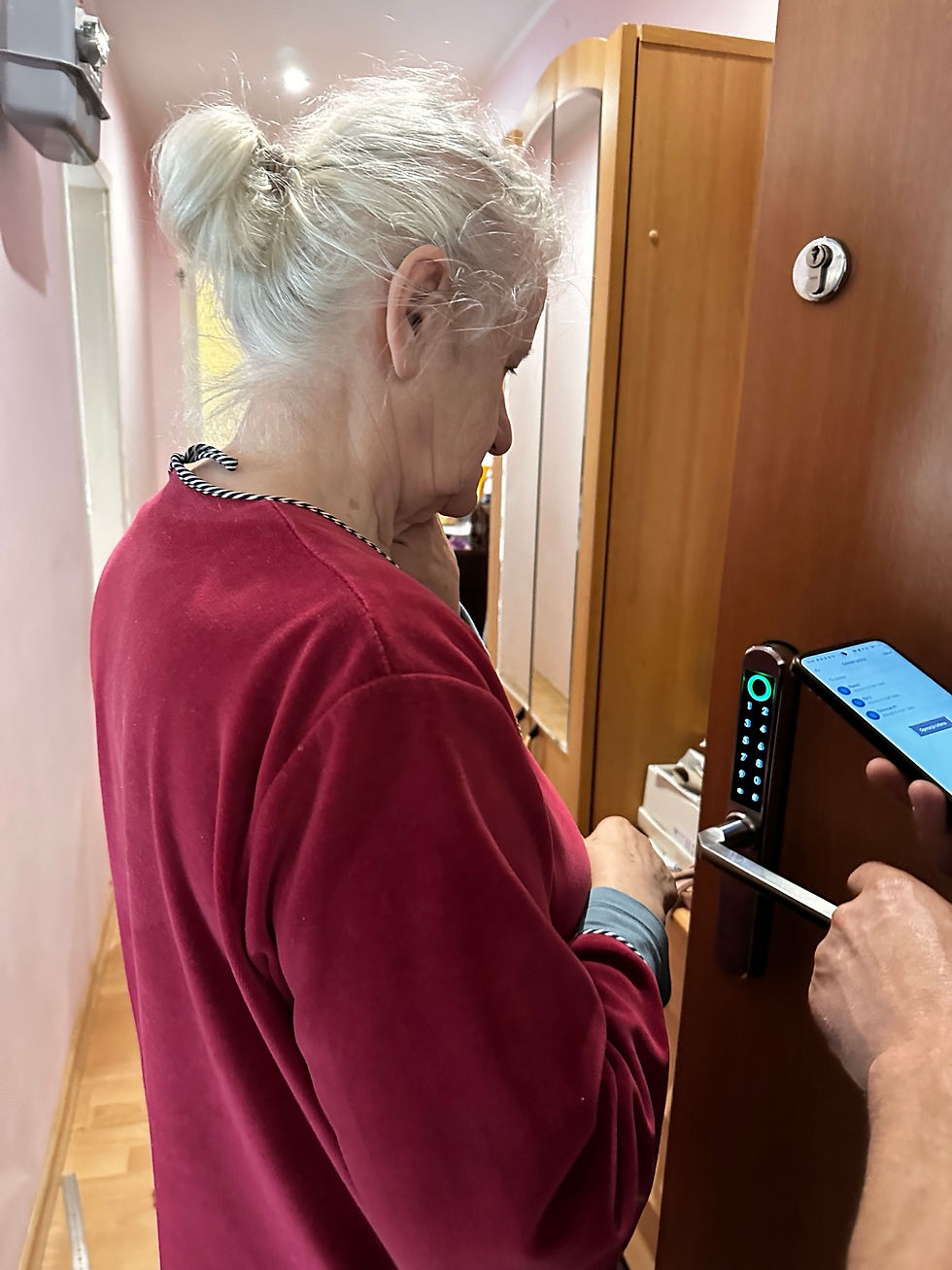
A lot of people are actually interested. They can see the convenience straight away. They can imagine not carrying keys, giving access to family members, staff, cleaners, or guests more easily, having to hide a spare key somewhere outside the house.
But there is still a gap between thinking, “That sounds useful,” and feeling ready to put it on your own door.
And I think that gap is usually filled with one thing:
The unknown.
It is the same with many new things.
At first, online banking felt strange to many people. Now most of us check our accounts on our phones without thinking too much about it.
Contactless payments were similar. At first, tapping a card felt almost too easy. Now it feels completely normal.
Smart locks are similar.
For many people, the fear is not really:
“I hate this idea.”
It is more like:
“I like the idea… but I don’t fully understand what happens if something goes wrong.”
And honestly, that is a very reasonable place to start.
Fear 1: “What If It Stops Working?”
This was my friend’s first question.
And I completely understand it.
When people imagine a smart lock “not working,” they often picture the worst possible scene: standing outside the door, the lock refusing to open, the app doing something strange, and everyone silently regretting their life choices.
Very dramatic.
But also very understandable.
The important thing to know is this:
A good smart lock should not leave you depending on only one way to get in.
Depending on the model, you may have different ways to unlock the door, such as a PIN code, fingerprint, app access, RFID card, mechanical key, or emergency backup option.
And this matters in real life.
Maybe you work with your hands and your fingerprints become worn from daily work. Maybe your hands are very dry in winter.
Or maybe, like me, your skin suddenly starts peeling and your fingerprint decides it no longer wants to cooperate.
That is when having another way to open the door really matters.

If the fingerprint does not read properly, you may still be able to use a PIN code.
If your phone is not with you, the lock should not automatically become useless.
If the app is not the best option at that moment, there should be another way to access the door, depending on the lock you choose.
That is the point of a good smart lock.
It should not give you only one “clever” way to open the door.
It should give you practical backup options for normal, messy, everyday life.
Because real life is not always clean hands, full battery, perfect Wi-Fi, and everything going exactly as planned.
The goal is not to make your door more complicated.
The goal is to give you more control, more flexibility, and more ways to access your property safely.
Fear 2: “What If the Battery Dies?”
Then came the battery question.
And again, fair enough.
Batteries die.
Phones die.
Remote controls die.
Children’s toys somehow always die at the most emotional moment.
So of course people wonder:
“If the battery dies, am I locked out?”
When it comes to a door lock, this worry deserves a proper answer.
Most good smart locks are designed with low battery situations in mind. They usually give low-battery warnings before the battery is completely flat.
Depending on the model, there may also be backup options, such as a mechanical key or emergency power supply.

For example, some of the models we work with, including the Slim S210 and Storm T710, include both of these backup options. It is a small detail, but for people who worry about being locked out, it makes a big difference.
But backup options only work if you actually have a plan for them.
If your lock comes with a backup key, make sure you know where it is kept — whether that means leaving it with a trusted family member, storing it safely somewhere accessible, or having a clear plan for who manages it in your business.
Because a backup key is only helpful if you can actually find it when you need it.
And this is why we believe people should be shown how their lock works before they ever need to deal with a problem.
You should know:
What the low battery warning looks like.
How to replace the batteries.
What backup method your lock has.
What to do if one unlocking method does not work.
Who to contact if you need help.
Because smart access should not feel like, “Here is a clever device, good luck.”
It should feel like, “Here is how it works, here are your options, and here is what to do if something happens.”
That makes a huge difference.
Traditional Keys Also Have Problems — We’re Just Used to Them
One thing I told my friend is that traditional keys are not perfect either.
We are just more used to their problems.
Traditional keys have their own problems too — they get lost, copied, broken, or end up in a place nobody can remember.
But because we are familiar with keys, those problems feel normal.
A smart lock feels scarier at first because the problems are less familiar.
And that is why explanation matters.
Most people are not afraid of smart locks because they hate technology.
They are afraid because they do not know what happens when something goes wrong.
The Real Reassurance Is Not Just the Word “Smart”
This is something I really believe:
The word “smart” alone does not make a lock reassuring.
What makes it reassuring is choosing the right lock for the right door, having it installed properly, and knowing how to use it. A smart lock should suit your door type, your lifestyle, and the way you actually use the space.
That is why the conversation before installation matters so much.
Once you understand your access options, battery warnings, backup methods, and what to do if something goes wrong, the lock no longer feels like an unknown thing.
It becomes something you understand.
You Don’t Have to Decide Straight Away
If you are curious about smart locks but still have a little “what if?” in your mind, that is completely normal.
You do not need to rush into anything or pretend you understand all the technical details.
And you definitely do not need to choose a lock just because it looks good in a photo.
Sometimes the best first step is simply asking:
“Would this work on my door?”
“What happens if something goes wrong?”
“What backup options would I have?”
“Would someone show me how to use it?”
At Bear & Me, we are happy to help you understand your options before you decide.
Send us a photo of your door and tell us what you are worried about. We will help you understand whether a smart lock would suit your door and what backup options you would have.
No pressure.
No confusing tech talk.
Just practical advice, proper installation, and support when you need it.
Because smart locks should not feel scary.
They should make life easier.


Comments