

The Future of Security: Smart Lock Innovations
- Jessica Zhang
- Sep 12, 2024
- 2 min read

Updated: Apr 28, 2025
The future of smart locks is poised for significant advancements driven by technological innovations and evolving consumer needs. Here are some key trends and potential innovations that are likely to shape the smart lock industry in the coming years:
Integration with Smart Home Ecosystems
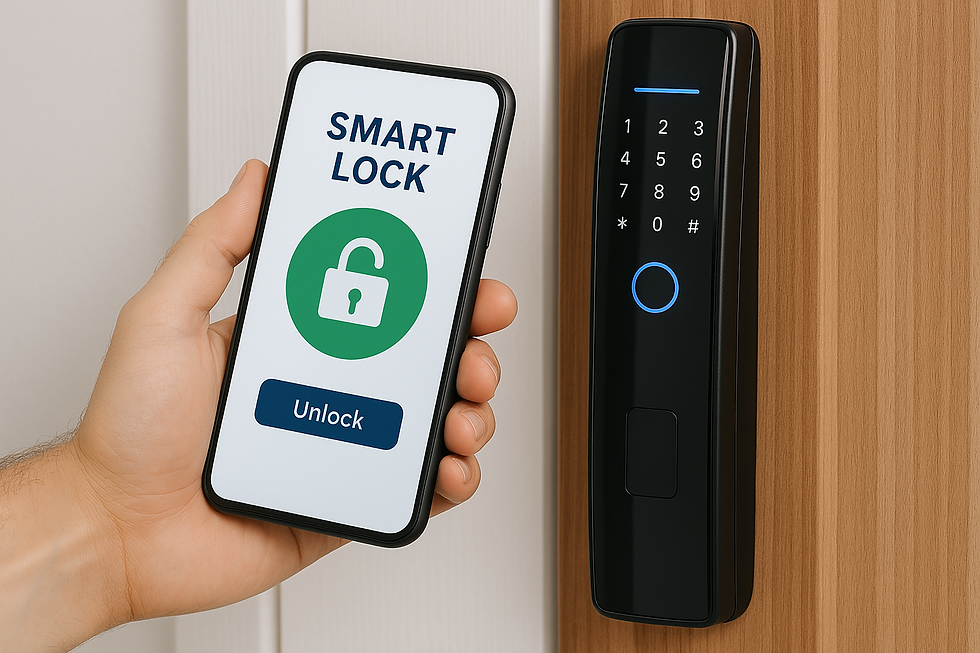
Smart locks will increasingly integrate with broader smart home systems, enhancing interoperability with devices such as security cameras, smart doorbells, and voice assistants like Amazon Alexa and Google Assistant. This integration will allow users to control their locks through voice commands and receive real-time notifications about their home security.
Enhanced Security Features
Future smart locks are expected to incorporate advanced security measures beyond traditional methods. Innovations may include:
Biometric Authentication: Enhanced biometric systems, such as voice recognition, iris scanning, and behavioral biometrics, will provide more robust security options.
Blockchain Technology: Utilizing blockchain for secure access logs and user authentication will ensure data integrity and protect against unauthorized access.
Improved User Experience
User experience will be a focal point, with developments aimed at making smart locks more user-friendly. Features may include:
Touchless Access: Technologies like RFID and ultra-wideband (UWB) will enable quick and hygienic unlocking without physical contact.
Adaptive Access Control: Smart locks may learn user habits, automatically unlocking when a recognized user approaches or adjusting access levels based on time of day.
Energy Efficiency and Sustainability
As environmental concerns grow, smart locks will focus on energy efficiency. Innovations may include:
Renewable Energy Sources: Integration of solar or kinetic energy harvesting technologies to power locks, reducing reliance on disposable batteries.
Low-Power Consumption: Development of energy-efficient components to extend battery life and minimize environmental impact.
Enhanced Connectivity and Control
The future will see improved connectivity options, leveraging technologies such as 5G for faster communication between devices. This will enable real-time updates and remote access capabilities, allowing homeowners to manage their locks from anywhere in the world.
Advanced Design and Customization
Smart locks will evolve in design, offering modular components that allow users to customize features and aesthetics. This will cater to diverse consumer preferences and modern architectural styles, making smart locks less obtrusive and more visually appealing.
Increased Focus on Privacy and Data Protection
With the rise of connected devices, privacy and data security will be paramount. Future smart locks will implement advanced encryption standards and provide users with greater control over their privacy settings, including data sharing permissions and access logs.
Globalization and Localization
Smart locks will adapt to meet global and local market needs, ensuring compatibility with regional security standards and cultural preferences. This will broaden their market reach and enhance user acceptance across different regions.
In summary, the future of smart locks is characterized by enhanced integration, security, user experience, and sustainability. As technology continues to advance, smart locks will become more intelligent, efficient, and user-centric, transforming how we secure and access our spaces.


Comments