

🏠 5 Steps to Make Your Front Door Safer for Seniors

Updated: Jul 29
Plus: What to Know About Dementia, Arthritis & Stroke Recovery
A Quick Note (2026)
Over the past year, I've spoken with more and more families looking for ways to help their ageing parents stay safe and independent at home.
It reminded me of this article, which I originally wrote in 2025.
Although the P220 model mentioned throughout the article has since been discontinued, I've decided to leave the guide unchanged because the goal was never to recommend one specific smart lock.
It was written to help families understand the challenges older adults may face and the practical features to look for when creating a safer, more accessible home.
I hope you still find it helpful.
When I wrote my last article about how certain health conditions—like dementia, arthritis, and limited mobility—can make traditional locks unsafe, I heard from so many people who saw their own families in those stories.
This time, I want to go one step further.
In this follow-up, we’re turning awareness into action: What can you actually do to make your front door safer, smarter, and easier for your aging loved ones to use every day?
From choosing the right smart lock (like the P220) to building a safer entry with complementary tools, this guide is here to help you turn concern into confident care.
Let’s break it down—expert tips, simple checklists, and thoughtful tech that quietly supports independence.
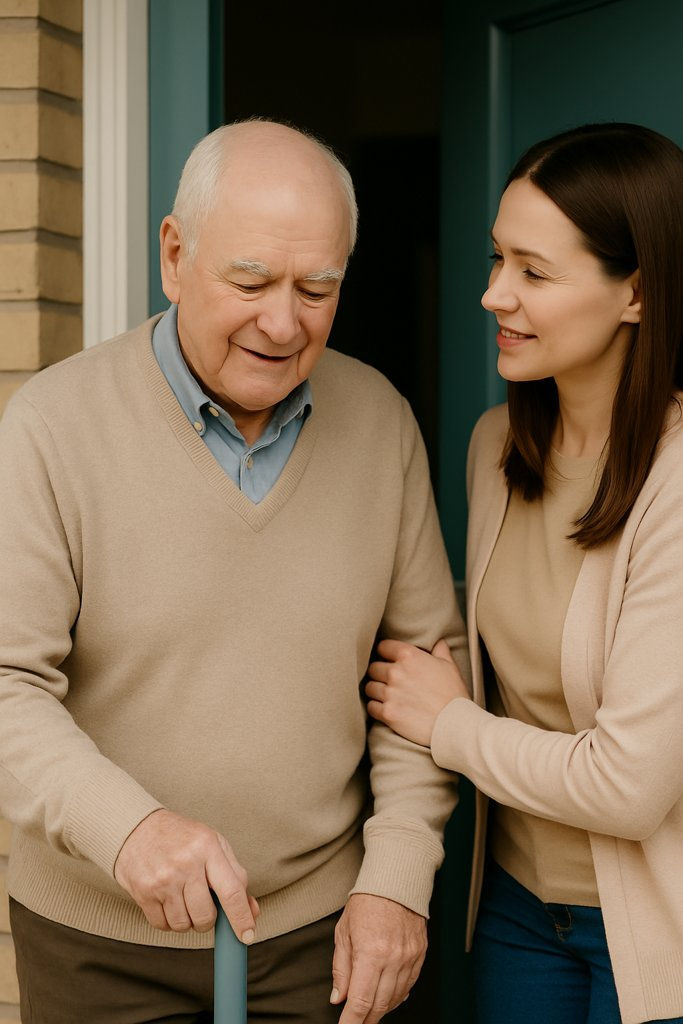
1️⃣ Understand the Risk: Common Health Conditions That Impact Home Safety
Everyday tasks like locking or unlocking the door can become safety concerns when health conditions come into play. Here are three common ones that experts look out for:
🔹 Memory Loss or Dementia
Forgetting to lock up, misplacing keys, or accidentally letting strangers in can put someone at real risk.
🔹 Arthritis or Parkinson’s
Hand tremors, stiffness, or pain make it hard to use traditional keys or door knobs.
🔹 Stroke Recovery or Limited Mobility
Reaching the door quickly or using small, forceful movements may not be possible.
🔒 When Little Signs Add Up
Sometimes the signs are small at first:
Misplacing keys more often
Asking “Did I lock the door?” again and again
Struggling to grip or turn a key
Avoiding errands because opening the door feels like too much
Then comes a moment that makes it real.
“My mom stepped out to water the plants and locked herself out. She didn’t have her phone or key. Luckily, we had the P220 installed, and I unlocked it remotely. That one moment made the whole decision worth it.”
🧠 Expert Tip: This is exactly why a smart lock like P220, with its touch-free options and remote access, is increasingly being recommended for senior safety.
2️⃣ Start with the Right Smart Lock Features
Not all smart locks are created equal—especially when you’re choosing one for an elderly family member. The right model doesn’t just replace a key—it removes physical barriers, supports independence, and gives everyone peace of mind.
That’s why we recommend the P220 smart lock, which is designed with flexibility and accessibility in mind:
✅ Multiple unlock options – Use a PIN code, fingerprint, or keycard—whatever suits the user best
✅ One-touch entry – No tiny buttons or twisting required. Just tap and go
✅ Auto-lock function – Automatically secures the door if it’s forgotten
✅ App control – Monitor and manage the lock from anywhere via your phone
✅ Tamper alerts & logs – Get notified of unusual activity and keep track of who entered and when
🖐 Senior-Friendly Handle Design
One thing we love about the P220 is its ergonomic handle—designed for comfort and ease. For seniors with arthritis or reduced grip strength, it offers a firmer, more natural hold than slim panels or knobs. The handle is not just for function—it’s an added point of safety, helping with balance and control during everyday use.

The P220 blends modern security with practical accessibility—perfect for independent seniors and peace-of-mind caregivers.
3️⃣ Build a Smarter Entry: Pairing Tools for Safer Living
A smart lock like the P220 is a great first step—but pairing it with other smart tools turns your entryway into a complete safety zone:
Tool | Why It Helps |
🛎️ Video Doorbell | See who’s at the door—even when you’re away |
💡 Motion-activated Light | Prevents nighttime tripping and improves visibility |
🗣 Voice Assistant (e.g., Alexa) | Lock/unlock with voice—no buttons or bending needed |
🆘 Wearable Emergency Button | Offers fast help if there's a fall near the door |
🛠 Quick Safety Checklist:
☐ Smart lock with backup entry
☐ Visible house number
☐ Well-lit path to the door
☐ Easy-to-use door handle
☐ No clutter or tripping hazards around the entrance
4️⃣Introducing Smart Tech to Older Adults (Without Overwhelming Them)
We get it—introducing new technology to aging parents can be tricky.
“When I first showed my mom the smart lock app, I made the mistake of rushing through it. I showed her five things at once, and she just looked overwhelmed. She said, ‘I think I’ll just keep using the key.’ I realized then—it wasn’t about the tech. It was about how I introduced it.”
That moment taught me to slow down and meet her where she was.
👵 Here’s what worked better:
✅ Start with just one feature—like fingerprint or card
✅ Demonstrate it yourself, slowly, and let them try it
✅ Repeat instructions patiently, even if it takes a few tries
✅ Use labels or visual cues (e.g., “Press here”)
✅ Reassure them: “There’s always a backup if something goes wrong”
✅ Always offer a physical key as backup for peace of mind
🎉 The P220 helps with this too—its intuitive interface and ergonomic handle make it feel like a smart upgrade, not a confusing device.

Smart home devices like the P220 smart lock are easier to adopt when introduced with empathy and simplicity.
5️⃣ Involve the Whole Care Team
Whether it’s family, part-time carers, or neighbors, everyone involved should know how to use the system.
With the TTLock app (compatible with the P220), you can:
Grant or remove access in seconds
Schedule one-time or recurring entry for carers or cleaners
Check logs to see when the door was opened
This gives everyone confidence—without key handovers or coordination headaches.
📈 Did You Know?
The number of adults aged 65 and older buying smart locks nearly doubled in just one year—from 16% to 29%—making them one of the fastest-growing age groups adopting this technology.
Why? Because smart locks are safer, easier, and offer peace of mind for the whole family.
(Source: SecuritySales.com)
🛎 Final Thoughts: Smart Entry, Peace of Mind
When someone you love is facing physical or cognitive challenges, something as simple as a front door shouldn’t be a daily worry.
With thoughtful planning—and a lock like the P220—you can transform it from a point of stress into a quiet source of support.
Need help building your setup?
Message us at Bear and Me. We’ll help you find the right combination of tech and care—starting at the front door.


Comments