

The Call Every Caregiver Dreads
- Jessica Zhang
- Jan 22
- 3 min read

Not long ago, we came across a story shared by someone online.
It was a regular afternoon.
She was at work when her phone rang.
The caller wasn’t a family member.
It was an unfamiliar voice.
“Hello, I’m your father’s neighbour. He seems to have forgotten his keys and has been standing outside for a while. I’ve invited him into my place so he can wait for you.”
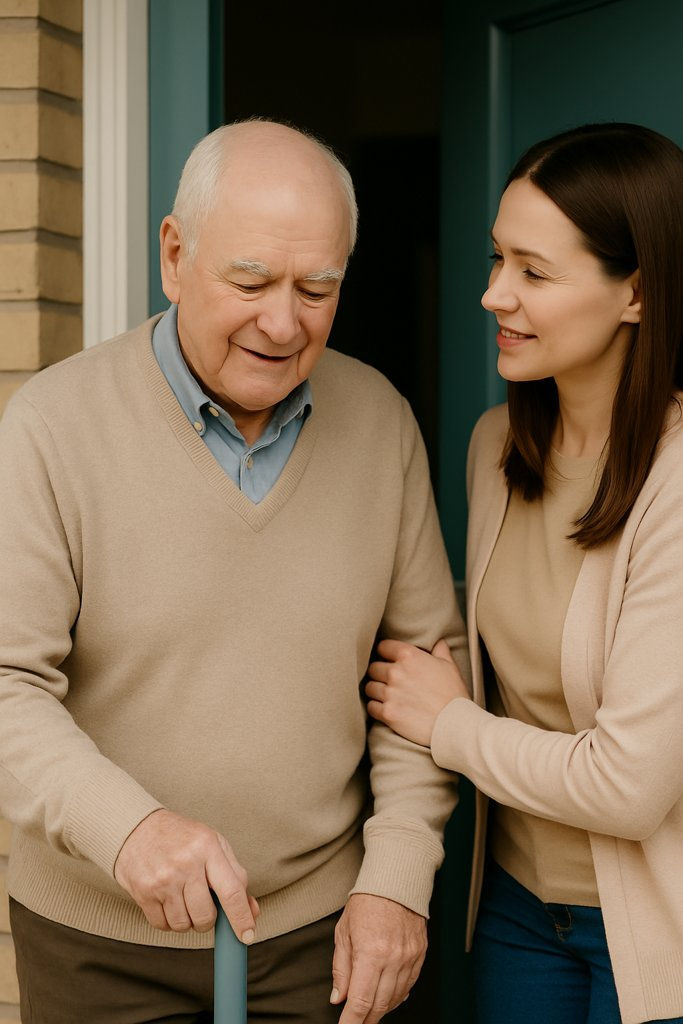
She immediately asked her manager for half a day off, grabbed the spare key, and rushed home — deeply grateful that someone had noticed and stepped in to help.
She wrote about how grateful she was.
She wanted to remind people that there are still many kind-hearted individuals in the world, and to pass along this small but meaningful moment of warmth.
And it was a warm story.
But as we read it, another thought quietly followed.
Yes — that day, he happened to meet a kind person.
But what if no one had been there?
What if it had been later in the evening?
What if it had been freezing cold, in the middle of winter?
What if no one noticed an elderly man standing outside his own home?
Moments like this are comforting —and at the same time, unsettling.
Because kindness, as precious as it is,shouldn’t be the only thing keeping someone safe.
Real life doesn’t always line up so perfectly.
This time, the neighbour was home.
The weather wasn’t harsh.
The phone call was answered.
But not every day comes with so many “just in time” moments.
So many risks stay invisible —until the one day they don’t.
The hardest part is being the one who answers the call
Stories like this aren’t really about doors or keys.
They’re about the person on the other end of the phone.
You’re at work and can’t leave.
You’re abroad and can’t get back. (just like me)
You’re picking up your child while your mind races with worst-case scenarios.
The most frightening thing about that call isn’t what’s happening —it’s realizing how little you can do in that moment.
Caring for elderly parents often isn’t physically exhausting.
It’s mentally heavy.
Remote unlocking isn’t about convenience — it’s about certainty.
Some people see remote unlocking as a “nice-to-have” feature.
For caregivers, it means something else entirely:not having to rely on luck.
You don’t have to rush home.
You don’t have to cancel plans.
You don’t have to hope a neighbour is nearby.
At the very least, you can take action immediately —you can open the door.
Not because you care less,but because you finally have an option.
Technology can’t replace presence — but it can reduce helpless moments
A smart lock won’t solve everything and and it will never replace human care.
But it can prevent moments that shouldn’t happen at all —standing outside, searching for lost keys, or needing to ask strangers for help.
For elderly parents, it removes unnecessary barriers.
For caregivers, it removes one of the most dreaded phone calls.

Bear & Me’s perspective
At Bear & Me, this topic is deeply personal.
Both of us live abroad, while our parents live alone back home.Distance makes everyday worries heavier — forgetting to lock the door, misplacing keys, or what might happen if something goes wrong at home and help can’t get in immediately.
With traditional locks, even when assistance is urgently needed, it often means waiting —waiting for someone with a spare key,waiting for a neighbour,waiting while precious time slips away.
Since launching Bear & Me last year, we’ve also received messages from adult children asking about smart locks for their parents. Different families, different circumstances — but the same underlying concern.
That’s why stories like this resonate so strongly with us.
We don’t see smart locks as gadgets or lifestyle upgrades.We see them as practical safeguards — especially for families who can’t always be physically present.
If technology can shorten the time between “something’s wrong” and “help arrives,”then it’s worth taking seriously.
Our hope is simple:that parents can live with safety, dignity, and independence —and that those who care for them, near or far, can have a little more peace of mind.
If you’re thinking about how to make everyday life safer for elderly parents, we’ve previously written about elderly home safety and five practical steps to create a safer front door.
You can find the article here.
Comments